Finnish Pallid Harrier wintered in Morocco in a rich, yet dangerous area

Selja the Pallid Harrier after her arrival to Finland, spring 2019 (photo by Ari-Pekka Auvinen via SuomenLuonto.fi)

A Pallid Harrier satellite-tracked in Finland spent the winter in the Guelmim region, southern Morocco. The area is very rich in preys but also very dangerous for raptors because of electrocution. This is the first proven wintering record of the species in Morocco. Westward expansion of the Pallid Harrier Pallid Harrier (Circus macrourus) breeds in

Finnish Pallid Harrier wintered in Morocco in a rich, yet dangerous area Read More »

Répartition et évaluation de la vulnérabilité de la Pie du Maghreb (Pica mauritanica)

Maghreb Magpie / Pie du Maghreb (Pica mauritanica), north-east Algeria (Mourad Harzallah)

Lancement du projet Répartition et évaluation de la vulnérabilité de la Pie du Maghreb Pica mauritanica” (en français, veuillez voir après l’illustration). Until very recently, the Maghreb Magpie (Pica mauritanica) was considered as conspecific with the Eurasian Magpie (Pica pica). However, a new study by Song and his co-authors published in 2018 found that Maghreb

Répartition et évaluation de la vulnérabilité de la Pie du Maghreb (Pica mauritanica) Read More »

North African Ostrich eggs unearthed at Bir Anzarane, southern Morocco

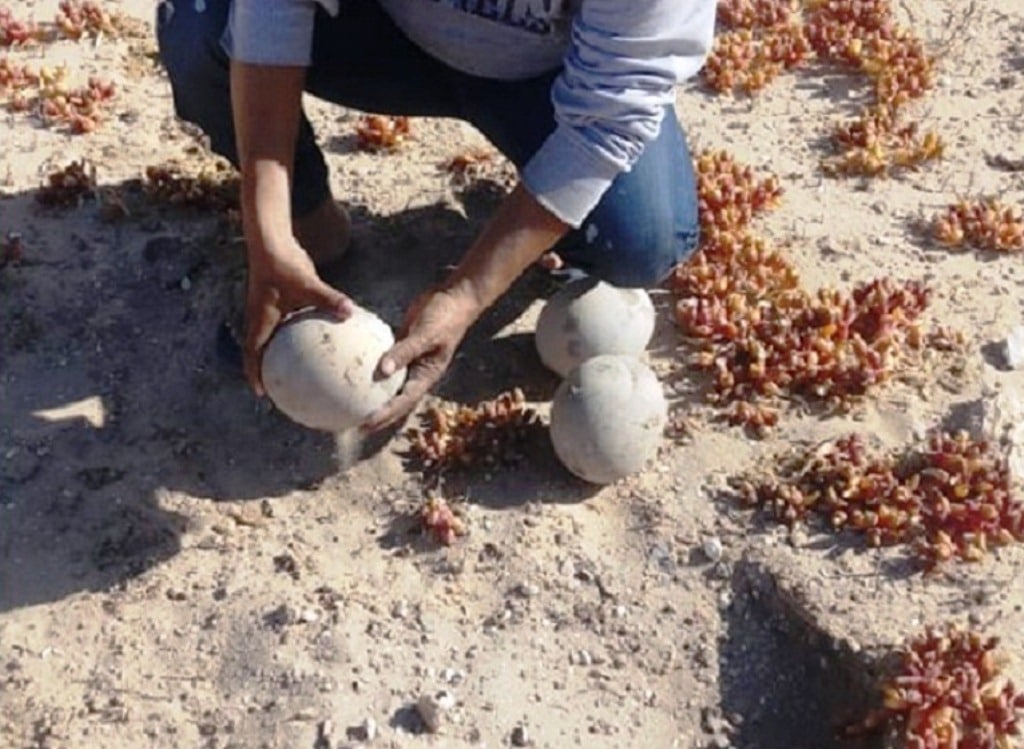
North African Ostrich eggs found near Bir Anzarane, Oued Dahab region, southern Morocco

Three intact eggs of the North African Ostrich found near Bir Anzarane in Oued Dahab region. Trois œufs intacts d’autruche d’Afrique du Nord trouvés près de Bir Anzarane au sud du Maroc. In mid-May 2019, ‘Nature Initiative Association’ member Mohammed Fathi found three intact ostrich eggs at Taguerzimt near Bir Anzarane, Oued Dahab region. The

North African Ostrich eggs unearthed at Bir Anzarane, southern Morocco Read More »

First photographed Rüppell’s Warbler in Algeria

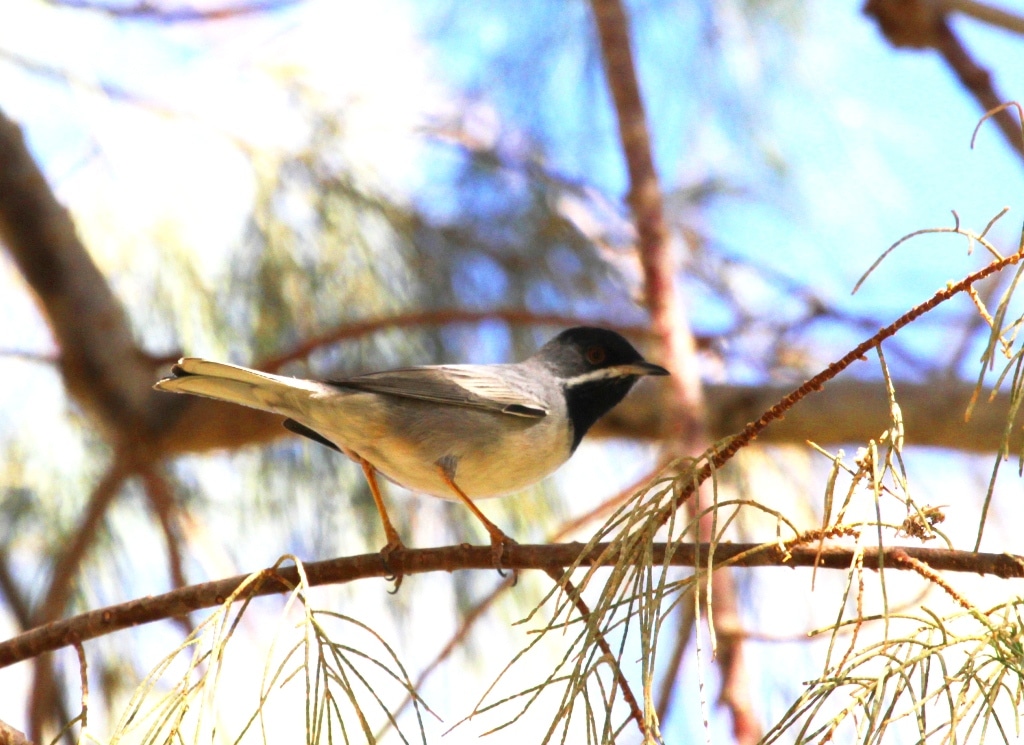
Rüppell's Warbler / Fauvette de Rüppell (Sylvia ruppeli), Djanet, south-east Algeria, 8 Dec. 2018 (K. Haddad & L. Afoutni)

The Rüppell’s Warbler (Sylvia ruppeli) breeds in northeastern Mediterranean (Greece, Turkey and small area in northwestern Syria), and winters mainly in the eastern part of the Sahel (Chad, Sudan). In Northwest Africa, the species is rare except in Libya where it’s a regular migrant. In Algeria, Isenmann & Moali (2000) cited only two previous records

First photographed Rüppell’s Warbler in Algeria Read More »

Sand Cats resting in bird nests built in tall Acacia trees

Sand Cat (Felis margarita) resting in Brown-necked Raven nest, southern Morocco (J. M. Bompar and co-authors)

Sand cats found resting in Brown-necked Raven nests. This original and previously undocumented behaviour was discovered in Western Sahara, southern Morocco. During a naturalist trip in the Dakhla-Aousserd region in autumn 2018, Jean-Michel Bompar and his colleagues found three sand cats (Felis margarita) resting in the nests of Brown-necked Ravens (Corvus ruficollis). The nests were

Sand Cats resting in bird nests built in tall Acacia trees Read More »

Moltoni’s Warbler in Morocco, Terek Sandpiper in Tunisia

Moltoni’s Warbler (Sylvia subalpina), Merzouga, Morocco, 18 Apr. 2019 (Marc Illa).

Some recent rarities: Moltoni’s Warbler, Franklin’s Gull, Lesser Flamingo and Dunn’s Lark in Morocco and a Terek Sandpiper in Tunisia. Moltoni’s Warbler (Sylvia subalpina) A bird was captured and ringed at Merzouga Ringing Station, Morocco, on 18 April 2019 (Marc Illa and his co-workers). Only four records have been accepted by the Moroccan Rare Birds

Moltoni’s Warbler in Morocco, Terek Sandpiper in Tunisia Read More »

DNA confirms Slender-billed Curlew is a valid species

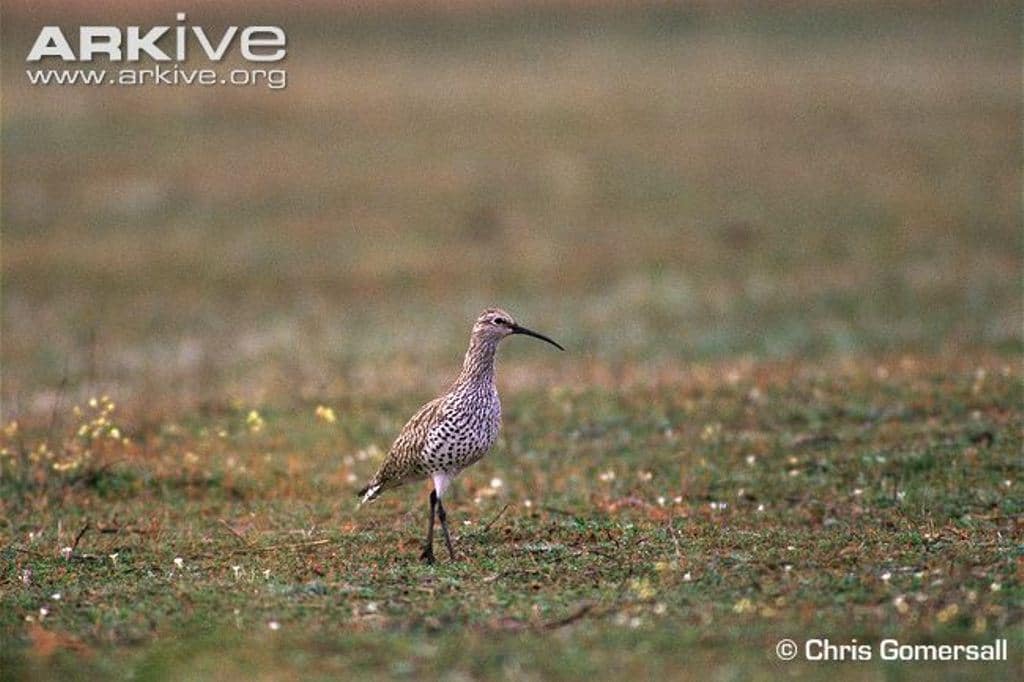
Slender-billed Curlew (Numenius tenuirostris), Merja Zerga, Morocco, winter 1995 (Chris Gomersall)

The mitochondrial genome of the presumably extinct Slender-billed Curlew is sequenced for the first time. This confirmed that the species is genetically distinct from the related curlews. The Slender-billed Curlew (Numenius tenuirostris) is one of the rarest bird species in the Palearctic region. Despite its rarity, it’s still officially categorized as a “Critically Endangered” species

DNA confirms Slender-billed Curlew is a valid species Read More »